Blog
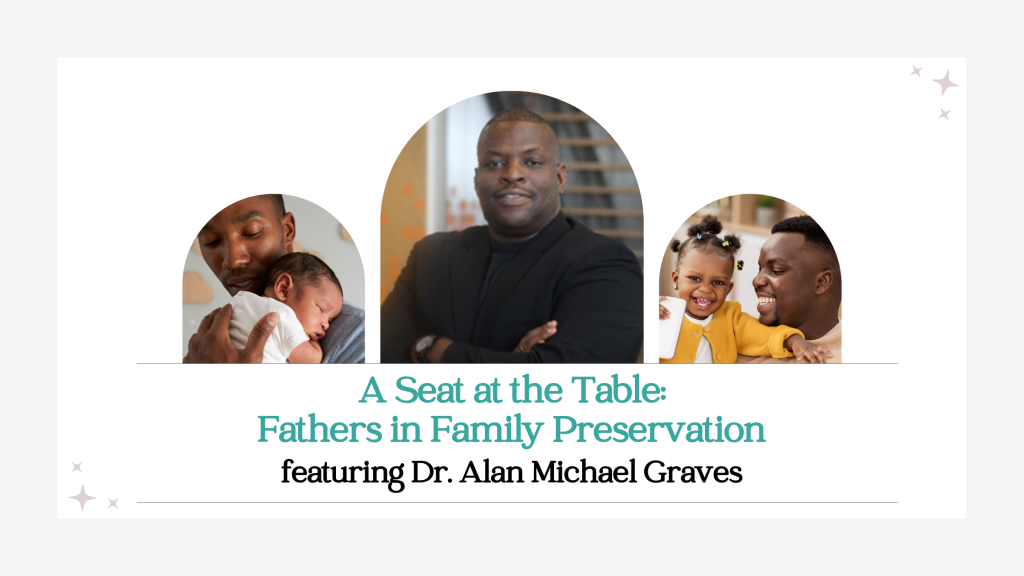
A Seat at the Table: Fathers in Family Preservation
At A Second Chance, Inc. (ASCI), we know that strong families are built through connection, support, and a commitment to ensuring children remain surrounded by the people who love them most. We also recognize that fathers, father figures, and paternal relatives play an important role in helping children thrive, yet their contributions are often overlooked in conversations about child welfare and family support.
A Leader in Child Welfare and Family Engagement
Few people understand this better than Dr. Alan Michael Graves, a nationally recognized child welfare leader, educator, adoptive father, and board member of the Black Administrators in Child Welfare (BACW). For more than two decades, Dr. Graves has dedicated his career to improving outcomes for children and families, with a particular focus on ensuring fathers are meaningfully included in systems designed to support them.
What began as a commitment to addressing the disproportionate number of Black children entering care quickly evolved into a broader understanding of family engagement. As Dr. Graves examined the challenges facing children and families, he recognized that many fathers and paternal relatives were often missing from conversations about permanency, family preservation, and child well-being, not because they did not care, but because systems frequently failed to engage them. At ASCI, we understand that successful kinship care depends on exploring and strengthening connections across a child’s entire family network, including the paternal side, which is too often overlooked despite its potential to provide lifelong support, stability, and belonging.

A Child-Centered Philosophy
His philosophy is simple yet powerful: “I’m not a fatherhood advocate. I’m a child advocate. I just work with fathers to improve the outcomes of children.”
That perspective closely aligns with ASCI’s mission. Every day, ASCI works alongside caregivers, parents, grandparents, relatives, and community members to create safe, stable, and nurturing environments for children. At the heart of that work is the belief that children benefit when all available family connections are explored and supported.
Personal Experience Shaping Practice
As an adoptive father, Dr. Graves has firsthand experience with many of the barriers families encounter while navigating child-serving systems. His journey reinforced the importance of treating families with dignity, reducing unnecessary obstacles, and creating pathways that encourage people to step forward in support of children. These experiences continue to shape his work and serve as a reminder that family-centered practice must remain at the core of child welfare services.

Challenging Misconceptions About Black Fatherhood
Dr. Graves is also passionate about challenging long-standing misconceptions surrounding Black fathers. While public narratives often focus on absence, his experience tells a different story of one rooted in commitment, resilience, and a deep love for children and family. He believes many fathers remain actively involved in their children’s lives in ways that systems do not always recognize or value.
At ASCI, we have seen firsthand the positive impact that engaged fathers and father figures can have on children’s well-being, family stability, and long-term success. Recognizing and uplifting those contributions is an important part of creating family-centered practices that honor the strengths already present within families and communities.
The reality is that Black fathers love their children and are involved in ways that systems don’t always recognize.
Dr. Graves

Fathers as Essential Partners in Family Systems
Dr. Graves’ message serves as a powerful reminder that fathers are valuable partners in supporting children and strengthening families. By intentionally engaging fathers and paternal relatives, ASCI continues to advance its mission of preserving family connections and ensuring children remain surrounded by the support systems they need to thrive.
For organizations like ASCI, this message is particularly important. Family engagement cannot be limited to one side of a child’s family. When paternal relatives are excluded from conversations, children may lose opportunities to remain connected to important relationships, cultural identity, and additional sources of support.
Connecting Fatherhood and Kinship Care
Dr. Graves often speaks about the natural connection between fatherhood and kinship care. Both are rooted in family relationships, community support, and a shared commitment to helping children remain connected to those who know and love them best. He encourages child welfare professionals and family-serving organizations to be intentional about exploring paternal family connections alongside maternal ones.

When we talk about kinship, we have to talk about both maternal and paternal family connections.
Dr. Graves
That message resonates deeply with ASCI’s work. Every family has a story, and every family connection matters. Whether support comes from a grandparent, aunt, uncle, sibling, father, or family friend, children benefit when caring adults are empowered to play an active role in their lives.
Investing in Prevention and Early Support
Dr. Graves also emphasizes the importance of prevention and education. Rather than waiting until families become involved with formal systems, he supports investing in parenting education, fatherhood support, and family-strengthening opportunities long before challenges arise. By providing fathers with resources, guidance, and encouragement early on, communities can help build stronger families and reduce the need for crisis intervention later.

This belief aligns closely with ASCI’s commitment to strengthening families through prevention, support, and meaningful engagement. Through ASCI’s Fatherhood Engagement Program, fathers and father figures are connected to resources, education, and opportunities that help them build stronger relationships with their children and families. By intentionally creating spaces where fathers feel valued, supported, and included, ASCI is helping to ensure that children benefit from the presence, guidance, and love of the important men in their lives. As Dr. Graves suggests, investing in fathers before challenges arise is not only an investment in families, but in better outcomes for children and stronger communities.

No Single Blueprint for Fatherhood
Throughout his work, one message remains consistent: there is no single blueprint for fatherhood. Every family is different, and fathers should be encouraged to show up for their children in ways that are authentic, healthy, and meaningful. Whether through nurturing, guidance, discipline, mentorship, or everyday presence, fathers contribute to the foundation children need to succeed.
A Year-Round Commitment to Strengthening Families
At ASCI, we believe that strengthening families is a year-round commitment. By recognizing the value of fathers, engaging paternal family connections, and supporting families before challenges become crises, we can continue creating brighter futures for children and communities. By strengthening families, we create the foundation for children to thrive and communities to flourish.
To strengthen families and expand fatherhood engagement, explore ASCI’s website and connect with Dr. Graves to learn how you can get involved or start fatherhood-focused work in your community.